

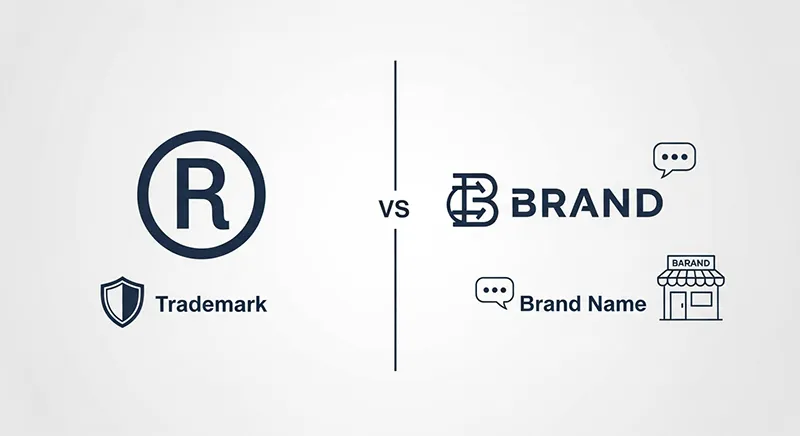
For many new entrepreneurs, "brand name" and "trademark" sound like the same thing. After all, both help people recognize your business, right? In reality, they play very different roles in building, protecting, and expanding your company. Understanding this difference isn't just a legal detail — it's essential to creating a strong, lasting business identity.
Whether you're looking to buy a registered trademark, browse U.S. trademarks for sale, or explore premium domains for sale, knowing how trademarks and brand names connect will help you make smarter, more strategic decisions.
1. What Is a Brand Name?
A brand name is the identity your customers see and remember. It's the word or phrase that represents your product or service — like "Nike," "Apple," or "Coca-Cola." A great brand name carries emotion, story, and reputation. It's what customers talk about, recommend, and trust.
Creating a strong brand name involves creativity, market research, and emotional insight. It must feel right for your audience, fit your industry, and stand out from competitors. However, having a great name doesn't automatically mean it's protected. That's where trademarks come in.
2. What Is a Trademark?
A trademark is the legal protection behind a brand name. It gives you exclusive rights to use that name (or logo, or slogan) in connection with specific products or services. Think of it as a legal shield that prevents others from using confusingly similar names that could harm your business.
When you buy a trademark or register one yourself, you're not just securing a name — you're securing the ability to build value around it without interference. In markets like the United States, owning a registered trademark is one of the strongest business protections available.
3. How Brand Names and Trademarks Work Together
In simple terms: your brand name is your identity; your trademark is your protection. You can have a brand name without registering it, but that leaves you exposed. On the other hand, registering your trademark legally reinforces your right to use the name and stop others from copying it.
That's why many entrepreneurs choose to buy U.S. trademarks for sale — they gain a legally protected, ready-to-use identity without waiting months for approval. It's a shortcut to launching with confidence, especially in competitive industries where speed matters.
4. Why Legal Protection Matters More Than Ever
In the digital age, businesses go global from day one. That means your name isn't just seen in one city — it's visible across countries and platforms. Without a registered trademark, your brand could face serious risks: copycats, domain squatters, or even legal disputes that block your growth.
Platforms offering trademarks for sale now make it easier for entrepreneurs to secure rights to verified, transferable marks. These platforms also ensure each trademark has clear ownership, proper registration, and smooth transfer options — saving buyers both time and uncertainty.
5. The Role of Domain Names in Branding
Your domain name is your brand's online home. While it's not a trademark by itself, it plays a huge role in branding and visibility. Owning both your premium domain and your registered trademark gives your brand full control — online and offline.
For example, owning "Breeva.com" along with the registered trademark "BREEVA" means no one else can use your name or dominate your search space. It's a complete, unified identity — a strategy now used by serious startups and global companies alike.
6. Buying a Trademark vs. Registering One Yourself
Many entrepreneurs think registering a new trademark is the only option. But the process can take months, sometimes even a year, depending on the jurisdiction. Buying an existing trademark — especially a verified one listed on a trusted Global Trademark Exchange — can be a faster and safer alternative.
When you buy a registered trademark, you're purchasing an asset that's already examined, approved, and legally protected. That's why the market for U.S. trademarks for sale and international trademarks for sale is growing rapidly — it offers entrepreneurs instant access to brand-ready names.
7. How to Choose a Trademark That Strengthens Your Brand
Not every name makes a good trademark. The strongest marks are distinctive, memorable, and legally clean. Generic terms like "Beauty Soap" or "Healthy Drinks" are nearly impossible to protect. On the other hand, creative, invented names — such as "Rebox" or "Cofox" — are easier to trademark and build long-term value around.
Before investing, make sure your trademark or brand name:
-Isn't already registered by someone else.
-Matches an available domain name.
-Reflects your brand personality and market focus.
-Can expand internationally without conflicts.
8. The Financial Value of Trademarks and Brand Names
A powerful brand name supported by a registered trademark can become one of your company's most valuable assets. It represents not just recognition, but also trust, reputation, and legal exclusivity.
That's why investors, startups, and corporations are now buying registered trademarks and premium domains for sale as strategic business assets. When your brand name and trademark work together, they create real equity — something that can be sold, licensed, or franchised in the future.
9. The Global Trademark Exchange: Simplifying Brand Ownership
The rise of Global Trademark Exchanges has changed how businesses handle brand ownership. Instead of complex private transactions, entrepreneurs can now browse verified trademarks for sale, complete ownership transfers, and even match their marks with available premium domains — all in one secure process.
These platforms make trademark trading transparent, faster, and safer. For buyers, it means access to valuable names with legal clarity. For sellers, it opens a global audience of serious entrepreneurs ready to invest in established brand rights.
10. Final Thoughts: Building a Brand That Lasts
A brand name captures your vision. A trademark protects it. Together, they form the foundation of your identity in a global marketplace that moves faster than ever.
If you're starting or expanding a business, don't treat your name as just an idea — treat it as an asset. Whether you're looking to buy a trademark, buy a registered trademark, or secure U.S. trademarks for sale, doing so early can prevent costly problems later and add long-term value to your business.
In this new era of digital commerce, your brand is your future — protect it, invest in it, and let it grow with confidence.